


Artemis II Signals a New Era for Africa’s Role in Space
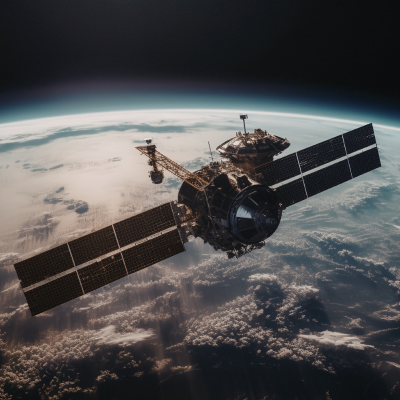
As Artemis II completes its historic journey beyond the Moon, the mission marks a defining moment in human spaceflight. It also highlights a broader shift that is increasingly relevant for Africa. Space exploration is no longer dominated by a handful of nations. It is becoming a global effort, and Africa is steadily positioning itself within that ecosystem.
As of April 2026, this shift is no longer theoretical. This week’s Artemis II lunar flyby has demonstrated how deeply international modern space missions have become, with global infrastructure and partnerships playing a critical role in mission success.
Countries including Nigeria, Rwanda, Angola, and Senegal have signed the Artemis Accords, aligning with international principles for safe and responsible space exploration. More importantly, these commitments are now being translated into tangible progress, with growing investment in infrastructure, skills, and international collaboration.
A clear example of this can be seen in South Africa’s contribution. The South African National Space Agency supports missions such as Artemis II through its Hartebeesthoek ground station, providing tracking, telemetry, and communications as part of the global network that maintains contact with the Orion spacecraft. This reflects a broader transition across the continent, from observer to active contributor in mission support and space infrastructure.
Africa’s space industry is also entering a period of rapid growth. The sector is expected to exceed $22.6 billion dollars in value by 2026 and is already tracking beyond $24 billion, with projections suggesting it could reach nearly $40 billion dollars by 2030. This expansion is being driven by increased satellite launches, rising regional investment, and a growing number of space focused startups.
As of April 2026, over 65 satellites have already been launched by African nations, signalling a clear shift toward a more distributed and increasingly capable space ecosystem. Participation is expanding beyond established players, with countries such as Mauritius, Botswana, and Djibouti actively entering the space domain, reinforcing a more inclusive and continent-wide capability base.
A further indicator of progress is the evolution of governmental structures. Several African nations are establishing dedicated national space agencies, creating clearer frameworks to support investment, coordinate national strategy, and strengthen regional collaboration.
This momentum is being driven by a powerful combination of talent, investment, and international cooperation. A new generation of African engineers, scientists, and entrepreneurs is accelerating innovation across the sector, bringing fresh thinking and locally relevant solutions to complex challenges.
Governments are increasingly recognising space as a strategic enabler of economic growth and national resilience. Investment is expanding beyond satellite programmes into broader infrastructure, including ambitious projects such as the development of commercial spaceports in Djibouti. These initiatives signal a long-term commitment to building a sustainable and competitive position within the global space economy.
International partnerships continue to play a critical role. Collaboration with organisations such as the African Space Agency and the European Space Agency is supporting research, skills development, and knowledge exchange. Programmes such as the African Research Fellowships are helping to equip the next generation of African space professionals with the expertise required to operate at a global level.
The importance of space extends far beyond exploration. Space based systems are now essential to modern defence and security operations, as well as to economic resilience. Across the continent, they are supporting intelligence gathering and situational awareness, strengthening border and maritime security, enabling more effective disaster response and environmental monitoring, and underpinning communications and digital infrastructure.
This is why space is a central focus at the Africa International Defence Exhibition, AFRIDEX 2026, taking place in Lagos, Nigeria. The event positions space alongside land, air, maritime, and cyber as a critical operational domain within the modern security environment.
AFRIDEX will bring together government leaders, military stakeholders, and industry partners to explore how space technologies can be deployed to strengthen Africa’s defence and security landscape. It will also highlight the role of dual use systems, from satellite communications to earth observation and ground infrastructure, all of which are essential for both security and socioeconomic development.
The Defence Summit at AFRIDEX will further advance this discussion, providing a platform for high level dialogue on Africa’s space strategy, regional cooperation, and investment opportunities.
Artemis II may represent a milestone in human exploration, but it also reflects a broader reality. Africa is no longer on the sidelines of the global space economy. It is building capability, forming strategic partnerships, and contributing to the infrastructure that will define the future of space.
AFRIDEX 2026 will play a key role in shaping what comes next.