

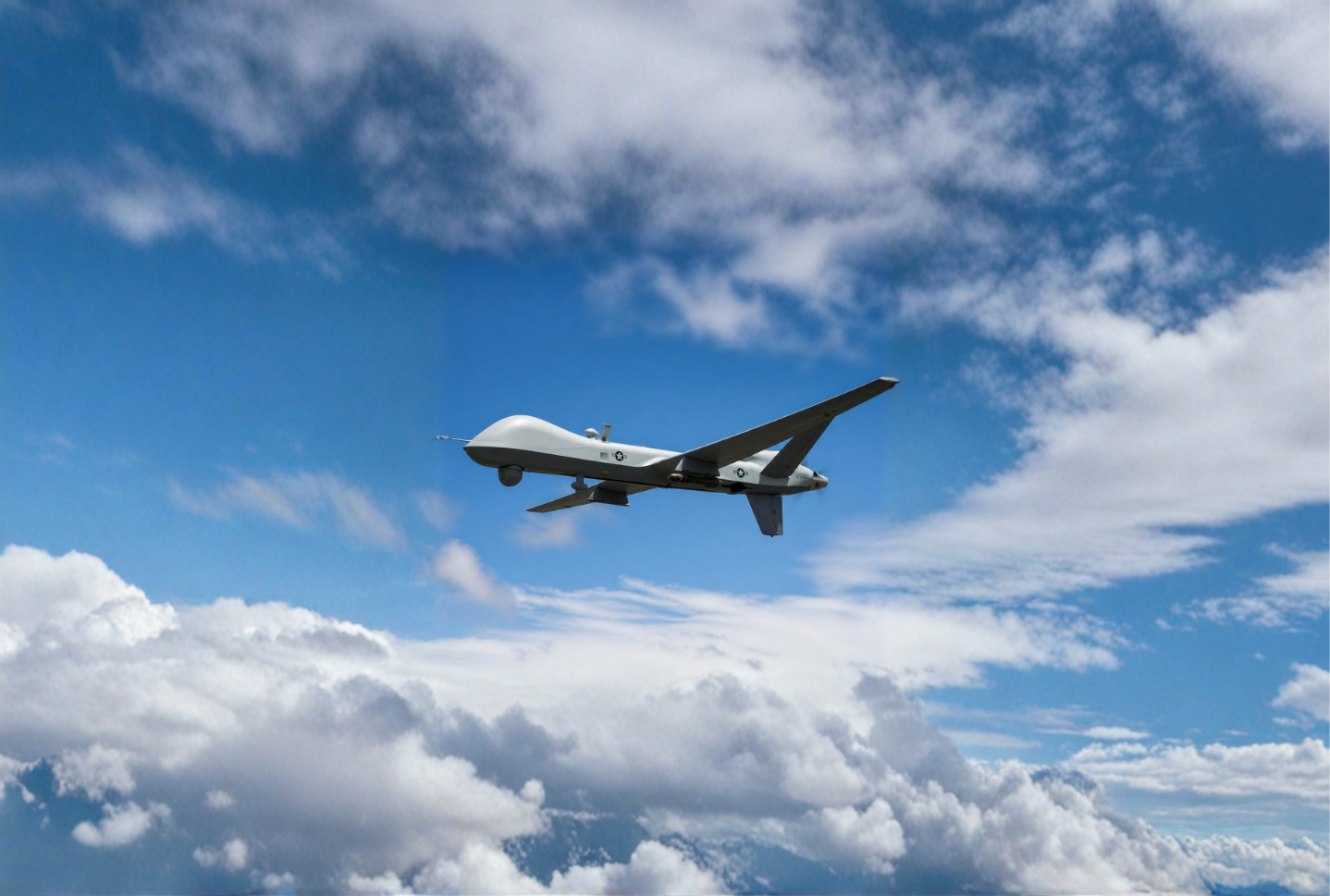
Cyber capability that strengthens resilience, trust and operational readiness
The Cyber domain at the Africa International Defence Exhibition focuses on the capabilities that help defence and security organisations protect systems and data, maintain operational continuity, and strengthen resilience across critical services and mission environments.
Key Cyber capability themes including cyber risk governance, security operations and incident response, secure communications and identity, data protection, supply chain security, and resilience for operational technology and critical infrastructure, supported by training and standards-led professional development.
The Africa International Defence Exhibition is designed as a defence and security platform that connects Cyber capability stakeholders with industry across:
- Primes
- Tier 1 suppliers
- Tier 2 suppliers
- Tier 3 suppliers
- SMEs
- Dual-use innovators
Through a structured exhibition, conference and protocol-led engagement, the primary goal is to support measurable cooperation pathways within a high-integrity environment aligned to transparent, structured engagement.
CYBER EXHIBITORS




















For Africa, stronger Cyber capability supports human security outcomes that include:
Strengthening the resilience of critical infrastructure and public services that depend on trusted digital systems.
Improving crisis response and continuity by ensuring secure communications, coordination and recovery capabilities.
Supporting economic resilience and digital transformation by strengthening trust, governance and capacity across the digital ecosystem.
OFFICIAL DELEGATIONS ATTENDING



































THE IMPORTANCE FOR CYBER DOMAIN EXHIBITORS
Position your Cyber solutions and services in front of defence and security stakeholders, and progress engagement through scheduled, protocol-led formats aligned to procurement integrity and compliance-aware dialogue.

ENGAGE CYBER CAPABILITY STAKEHOLDERS
Connect with defence and security cyber leaders, capability planners and resilience stakeholders through structured engagement formats designed for secure, productive dialogue.

ACCESS SUPPLY CHAIN PATHWAYS ACROSS TIERS
Build visibility with primes, integrators, Tier 1–3 suppliers and African SMEs through structured supplier pathways that support local capacity and long-term resilience.

SUPPORT SUSTAINMENT AND LIFECYCLE READINESS
Advance partnerships that strengthen governance and assurance, aligned to recognised good practice for managing cyber risk and information security.

GAIN CONFERENCE-GRADE INSIGHT
Use the conference and programme content to build understanding of cyber risk, resilience, workforce development, and cooperation mechanisms that support safer digital environments.
THE IMPORTANCE FOR CYBER DOMAIN VISITORS
Explore Cyber capability themes, compare approaches across industry tiers, and gain practical insight through conference content designed to support readiness, resilience and interoperability.

MEET AFRICAN AND INTERNATIONAL INDUSTRY ACROSS TIERS
Engage with African and international primes, integrators and Tier 1–3 suppliers, including SMEs with relevant cyber resilience, data protection and security operations capabilities.

UNDERSTAND CAPABILITY THEMES AND TRADE-OFFS
Explore how governance, identity, security operations, incident response and supply chain assurance fit together across the Cyber domain, informed by outcomes-led frameworks.

BUILD PROCUREMENT AND GOVERNANCE UNDERSTANDING
Gain perspective on legal and governance frameworks that support trusted digital environments and cross-border cooperation.

STRENGTHEN READINESS THROUGH TRAINING INSIGHT
Engage with sessions and formats that treat training as a deliverable outcome, supporting standardisation and interoperability across stakeholders.

IDENTIFY COOPERATION PATHWAYS
Move from event engagement into structured follow-on dialogue that supports cooperation pathways.
DESIGNED TO CROSS THE ENTIRE CYBERECOSYSTEM
Participation is structured and protocol-led, supporting credible engagement across government, armed forces and industry.

MINISTERS AND SENIOR GOVERNMENT OFFICIALS
Policy direction and cooperation pathways.

DEFENCE AND SECURITY CYBER LEADERSHIP
Resilience priorities, operational requirements and interoperability needs.

NATIONAL CYBERSECURITY AGENCIES AND RESILIENCE STAKEHOLDERS
Governance, coordination and incident readiness.

DEFENCE AND SECURITY PROCUREMENT STAKEHOLDERS
Acquisition, assurance and programme delivery considerations.

PRIME CONTRACTORS, OEMS AND INTEGRATORS
Secure architecture and integration.
TIER 1–3 SUPPLIERS AND SMEs
Tools, services, secure software and supply chain assurance.

TRAINING AND PROFESSIONAL DEVELOPMENT PROVIDERS
Skills development, standards alignment and workforce readiness.
CURRENT CYBER CAPABILITIES BY AFRICAN COUNTRY
COUNTRIES
-
NIGERIA

-
ALGERIA

-
EGYPT

-
ETHIOPIA

-
GHANA

-
KENYA

-
MOROCCO

-
MOROCCO
-
RWANDA

-
RWANDA
-
SOUTH AFRICA

-
TUNISIA
NIGERIA
CYBER PROGRAMMES:
Includes 10,000+ consulting hours and 4,500 employees trained. Part of a 27-country CyberSafe footprint.
Funded by the federal government. Led by the Office of the National Security Adviser and the Federal Ministry of Communications, Innovation and Digital Economy. Supported by Microsoft, Cisco, IBM, Huawei, Galaxy Backbone, and international partners including the UK, EU and World Bank.
Government-funded through the Nigerian Armed Forces and Ministry of Defence budget. Led by Defence Headquarters and the Nigerian Army Signal Corps. Industry partners include Indra, Leonardo and Huawei.
Coordinated by the Central Bank of Nigeria, Nigerian Upstream Petroleum Regulatory Commission and ONSA. Private-sector funding plays a major role, especially from Shell, Chevron, NNPC Limited and major banks such as Access Bank, Zenith and GTBank. Vendors include Kaspersky, Palo Alto Networks, Fortinet and Check Point.
Fully state-funded through federal ICT and security budgets. Implemented by Galaxy Backbone and NITDA. Partners include Huawei, Cisco, Ericsson and local integrators.
ALGERIA
CYBER PROGRAMMES:
Funded through the Algerian People’s National Armed Forces defence budget. Highly centralised under military command. Partners include Russia for doctrine, training and systems support, and China for infrastructure and cyber tools.
Funded by the Ministry of Post and Telecommunications and national security services through state ICT and internal security budgets. Partners include Huawei, ZTE and selected European monitoring and analytics vendors.
Funded primarily by Sonatrach for oil fields, pipelines and LNG infrastructure, with oversight from the Ministry of Energy and Mines. Partners include Schneider Electric, Siemens, Kaspersky, Cisco and European industrial/cyber vendors.
EGYPT
CYBER PROGRAMMES:
Centralised government-led model funded through state security and ICT budgets. Led by the National Telecom Regulatory Authority and Supreme Cybersecurity Council. Partners include Huawei, Cisco, IBM and European partners, particularly France.
Funded directly through the Egyptian Armed Forces and defence budget. Partners include Thales, Leonardo and US defence relationships for training and systems integration, though visibility is limited.
Funded by the Ministry of Interior and General Intelligence Service through internal security budgets. Partners include Huawei, ZTE and European firms from France and Germany, with AI-enabled monitoring across major cities.
Funded by the Ministry of Defence and Ministry of Interior, supported by national telecom investment programmes. Partners include Thales, Motorola Solutions, Ericsson and Nokia.
ETHIOPIA
CYBER PROGRAMMES:
Led by the Information Network Security Administration and funded through state security and intelligence budgets. Partners include Huawei, ZTE and selected European monitoring vendors. Systems are closely integrated with Ethio Telecom’s national telecom backbone.
Fully state-funded through national security budgets. INSA operates as the central cyber and signals intelligence body. Partners include China for infrastructure, training and technical systems, with selective Israeli cyber intelligence cooperation.
State-funded through INSA and the Ministry of Innovation and Technology, integrated into national ICT programmes. Partners include Huawei, ZTE and Ethio Telecom.
GHANA
CYBER PROGRAMMES:
Ghana is included among 200 supported institutions and forms part of the wider 27-country CyberSafe network.
Government-funded and led by the Cyber Security Authority under the Ministry of Communications and Digitalisation. Supported by the World Bank Cybersecurity Development Project, ITU, Commonwealth Cyber Programme, Cisco, IBM and Huawei.
Funded by the Cyber Security Authority and CERT-GH through government budgets, with international programme support. Partners include ITU, FIRST/global CERT networks, and UK/EU cyber capacity programmes.
Funded through the National Information Technology Agency and government digital infrastructure budgets. Partners include Huawei, Vodafone Ghana/Telecel Ghana, and enterprise vendors for encryption and network security.
Funded by the Ministry of Interior and national security agencies through internal security budgets. Huawei is listed as a key Safe City and surveillance infrastructure partner, particularly in Accra.
KENYA
CYBER PROGRAMMES:
National response system operated by the Communications Authority of Kenya and backed by Government of Kenya ICT and security budgets. Supported by ITU, FIRST/global CERT networks, Cisco, Huawei and Kaspersky.
Funded by the Ministry of Defence and Kenya Defence Forces through defence budget allocations. Partners include Safaricom, Huawei, Ericsson, and likely Israeli and European defence firms.
Funded through the Ministry of Interior, National Administration and National Intelligence Service. Huawei is listed as a key Safe City systems partner for Nairobi and Mombasa, with additional Chinese, European and Israeli security tech providers.
Coordinated by CAK, NIS and sector regulators across energy and finance. Private-sector funding is significant, especially from Safaricom, major banks such as KCB and Equity Bank, and energy firms including KenGen and KPLC. Partners include IBM, Cisco, Palo Alto Networks, Fortinet and local cybersecurity firms.
MOROCCO
CYBER PROGRAMMES:
Funded by the Ministry of Interior and General Directorate for Territorial Surveillance through internal security and intelligence budgets. Partners include European suppliers, mainly France, Israeli firms such as NSO Group, and US/European cyber intelligence vendors.
Funded through the Royal Moroccan Armed Forces defence budget. Partners include France-based Thales and Airbus Defence & Space, Israeli cyber/intelligence partners, and US training and strategic cyber collaboration.
Funded by the Ministry of Interior, Ministry of Defence and national telecom modernisation programmes. Partners include Thales, Nokia, Ericsson and selective Huawei involvement.
MOROCCO
SUPPLIER COUNTRY:
Elbit Systems - artillery systems, drones and electronic warfare equipment
RWANDA
SUPPLIER COUNTRY:
Aselsan - communications and electronic systems
RWANDA
CYBER PROGRAMMES:
Led by the National Cyber Security Authority and Rwanda Information Society Authority. Funded through national ICT and security budgets. Partners include the World Bank, ITU, Israel-linked cyber cooperation, Cisco, Fortinet and Palo Alto Networks.
State-funded through national digital infrastructure programmes. Partners include KT Corporation, Huawei, Ericsson and Nokia.
Funded by the Ministry of ICT and Innovation, Rwanda National Police and security services through smart city and security budgets. Huawei is listed as a Safe City systems partner for Kigali, with AI-enabled monitoring and traffic/security integration.
SOUTH AFRICA
CYBER PROGRAMMES:
Centralised monitoring and response capability.
Development of offensive and defensive cyber capability.
Upgrades to secure communications infrastructure.
TUNISIA
CYBER PROGRAMMES:
Led by the National Agency for Computer Security, with oversight from the Prime Ministry and Ministry of Communication Technologies. Funded through state ICT and internal security budgets. Supported by the EU, ITU, Cisco, Fortinet and Kaspersky.
State-funded through digital transformation and e-government programmes. Implemented through national ICT agencies. Partners include Huawei, Orange Cyberdefense, Thales and local ICT firms.
Coordinated by ANSI across energy, transport and finance. Uses a public-private funding model where the state sets requirements and partially funds activity, while operators fund implementation. Partners include Siemens, Schneider Electric, Cisco, Palo Alto Networks and EU-backed resilience programmes.
INTERNATIONAL PAVILIONS